
ATTENDANCE
Student success starts with school attendance. Regular, on-time attendance is an important part of academic success and social and emotional well-being for your child or children. Being at school each day helps students stay connected to their learning, their teachers, and their classmates. Students who are absent from school miss important learning opportunities, which can be difficult, or even impossible, to make up.
Attendance changes from the STATE OF OHIO will take full effect with the 2026-2027 school year. With the change, if students miss too much classroom time - for ANY REASON - they can be labeled “Chronically Absent”.
To support student success, Norwood City School District is updating its attendance procedures to align with changes in Ohio law, including House Bill 410 (HB 410) and the recently enacted House Bill 96 (HB 96).
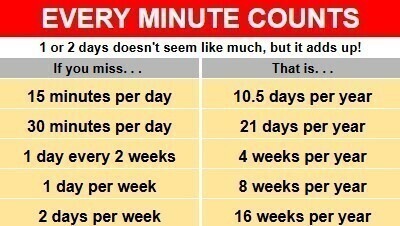
Students only need to miss 2-3 days per month to be chronically absent by the end of the year. It can add up quickly if a student comes late to school on a regular basis. Ohio calculates attendance based on hours, not days. This means that arriving late to school or leaving school early also contributes to the total amount of instructional time a student misses. Even small amounts of missed instructional time can add up over the course of the school year.
 What’s Changing? All Absence Hours Count
Earlier family notification – Schools will begin outreach before a student reaches 5% of total hours missed.
ALL absences count – “Excused,” “medical,” and “unexcused” absences now ALL count toward a student’s total hours missed. Historically, schools have tracked certain types of absences separately, particularly medical absences. Under Ohio's updated attendance law, the focus shifts to Chronic Absenteeism, which measures the total amount of instructional time a student misses, regardless of the reason for the absence.
What’s Staying the Same?
Families should continue to report absences through the school’s attendance line and provide documentation when appropriate
The state’s standards for habitual truancy remain the same – 30 consecutive hours, 42 hours in a month, or 72 hours in a year of unexcused absences.
Court involvement and enforcement timelines have not changed.
The district’s approach continues to emphasize support over punishment, using early communication and interventions to promote student success.
What To Expect?
Absence calls: Families will continue to receive an automated phone call when a student is marked absent and the absence has not been reported to the school. If your child will be absent, please contact your school’s attendance line as soon as possible so we know your child is safely accounted for.
Tardy Texts: Families of Norwood High School and Norwood Middle School will receive a text message near the end of the school day when their child has been marked tardy to school beginning September 1st.
If your student misses 3.5% of classroom time, which might be just a few days of school, you will be notified by the school on how important it is for them to attend school.
If your student misses 5% of classroom time, you will receive by mail and other means a letter and an invitation to schedule a meeting to discuss how to improve your child's attendance.
If the missed instructional time reaches 10% with no improvement from the first meeting, charges could be filed against your student for chronic absenteeism. Parents or guardians could also face charges for failing to send them to school.
A student who misses school for multiple medical appointments may have all absences excused; however, those hours still count toward chronic absenteeism calculations.
A student who misses several days due to illness may have all absences excused; however, those hours still count toward chronic absenteeism calculations.
As we all know, showing up for school has a huge impact on a student’s social and academic development. Even as children grow more independent, families play a key role in making sure students get to school and understand how attendance benefits their health and success in school and beyond. Thank you for your partnership to help support strong attendance and to make every instructional hour count.